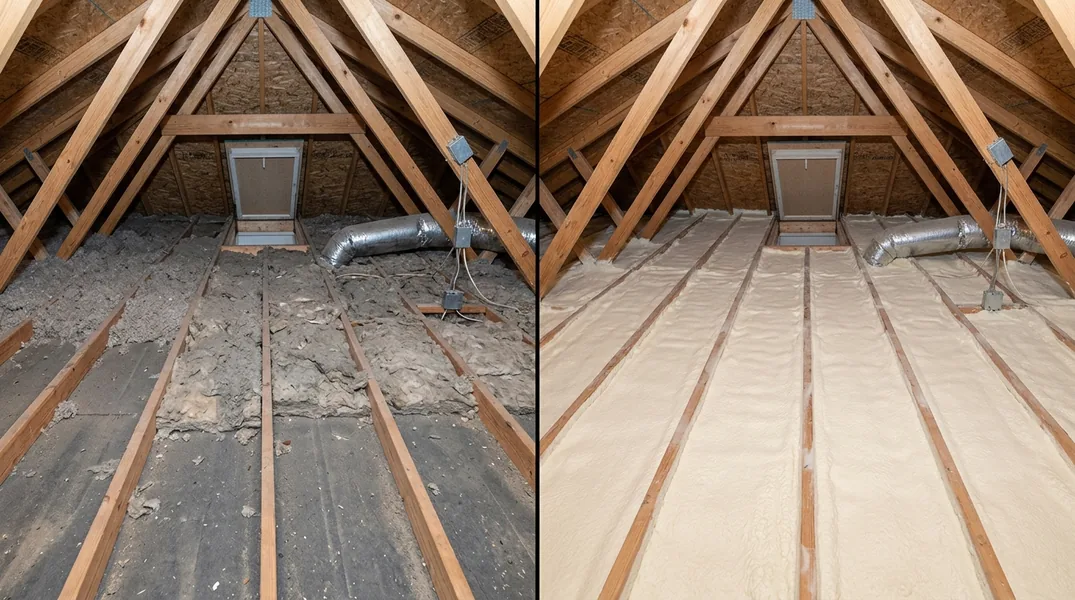
Understanding Permits Before You Spray
If you're planning Attic Spray Foam Insulation in Grand Junction, the first conversation you should have isn't about foam type or pricing. It's about permits. Many homeowners assume spray foam installation is a straightforward DIY upgrade or a quick contractor job, but Mesa County building codes require permits for most attic insulation work. This isn't bureaucratic red tape; it's a safety and compliance measure that protects your home's structural integrity and your investment.
The permit process in Grand Junction typically involves submitting plans, scheduling inspections before and after application, and ensuring the work meets local fire code and ventilation standards. When you hire a reputable spray foam contractor, they handle this paperwork for you. However, understanding what's required helps you ask the right questions and avoid costly mistakes. Some homeowners who attempt unpermitted work face issues when selling their homes or filing insurance claims. It's worth the small upfront effort to do it right.
Open Cell vs. Closed Cell Spray Foam: The Core Difference
Open Cell Spray Foam and Closed Cell Spray Foam Insulation are fundamentally different products, and choosing between them depends on your attic's needs, your climate, and your budget. Open cell foam has a softer, more porous structure that allows air and moisture to pass through slightly. It's typically less expensive, easier to install in tight spaces, and provides excellent sound dampening. However, it's more permeable, which means it requires a vapor barrier in certain climates to prevent moisture issues. In the dry, high-altitude environment of Grand Junction, open cell can work well if properly installed with appropriate ventilation.
Closed cell foam, by contrast, is denser and creates a moisture barrier as part of its structure. It's more rigid, provides structural support, and resists moisture intrusion without requiring an additional vapor barrier. This makes it ideal for attics in regions with humidity concerns or where moisture management is critical. The trade-off is cost: closed cell typically runs 40 to 60 percent higher than open cell. For Grand Junction homeowners, the choice often hinges on whether you're prioritizing maximum R-value and moisture protection (closed cell) or seeking a cost-effective solution with good thermal performance (open cell). Both are legitimate choices when installed correctly.
Spray Foam R-Value: What the Numbers Really Mean
R-value measures thermal resistance, and it's one of the most misunderstood metrics in insulation. Higher R-value means better insulation performance, but the relationship between foam type and R-value isn't straightforward. Closed Cell Spray Foam typically delivers an R-value of 6.0 to 7.0 per inch, while open cell foam provides approximately 3.5 to 3.6 per inch. This means that to achieve the same thermal resistance, you'd need nearly twice as much open cell foam by depth. However, R-value alone doesn't tell the whole story, especially in attics where air sealing is equally important.
In Grand Junction's climate, where winters can be cold and summers hot, the total insulation package matters more than a single number. Spray foam's real advantage is that it seals air leaks as it expands, something traditional batts or blown-in cellulose can't do. A 4-inch layer of closed cell foam might deliver R-24 to R-28 with complete air sealing, while 6 inches of open cell delivers R-21 to R-22 with similar air-sealing benefits. For attic applications, most building codes and energy efficiency standards recommend R-38 to R-60 depending on your location. The closed cell vs. open cell decision should factor in depth available, budget, and whether moisture control is a priority. When you're ready to evaluate what makes sense for your home, our team can provide a detailed assessment during your free estimate.
Fire Code and Safety Considerations
Spray foam insulation must meet strict fire safety codes, and this varies slightly depending on whether you're insulating an attic, walls, or crawl spaces. In Colorado, spray foam installations require a thermal barrier (typically 1/2-inch drywall) between the foam and living spaces to meet fire code requirements. This isn't optional, and inspectors will verify compliance. The reason is straightforward: while modern spray foams are flame-resistant, they can release smoke and gases if exposed to extreme heat. A thermal barrier slows fire spread and gives occupants more time to evacuate. Some foam products are rated for direct exposure in certain applications, but most attic installations require this protective layer.
Additionally, ventilation is critical. Closed cell foam creates an air-tight seal, which is excellent for energy efficiency but means your attic needs proper ventilation to manage any residual moisture and maintain air quality. Open cell foam allows some air movement, which can reduce ventilation demands but requires careful vapor barrier placement. Mesa County building inspectors will verify that your installation meets these safety standards before issuing a final approval. This is another reason working with an experienced, licensed contractor matters. They know the local code requirements and won't cut corners on safety. If you have questions about whether your attic will pass inspection or what upgrades might be needed, call Grand Junction Spray Foam Insulation at (970) 200-8449 to discuss your specific situation.
Attic Spray Foam Insulation Cost in Grand Junction: What to Budget
Pricing for attic spray foam varies based on the size of your space, the foam type you choose, and local labor costs. Open cell foam typically costs between $0.40 and $0.65 per board foot, while closed cell runs $1.00 to $1.50 per board foot or higher. For a typical 1,200-square-foot attic, open cell insulation to R-38 might cost $2,500 to $4,000, while closed cell to the same R-value could range from $4,500 to $7,000. These figures include labor, materials, and permit fees. The investment pays dividends through lower heating and cooling bills, often recovering costs within five to ten years depending on your energy usage and local utility rates.
When comparing quotes, make sure you're comparing the same specifications: foam type, depth, total R-value, and whether the price includes permits and inspections. Some contractors bundle these costs, while others itemize them. The cheapest quote isn't always the best value if it skips permits or uses inferior installation practices. Grand Junction Spray Foam Insulation provides transparent pricing and detailed estimates so you know exactly what you're paying for. Financing options are often available for larger projects, and some utility companies offer rebates for attic insulation upgrades. Request a free estimate to get an accurate number tailored to your home's dimensions and your energy goals.
Making Your Decision: Questions to Ask Your Contractor
Before committing to any spray foam project, you should feel confident that your contractor understands your attic's unique challenges and can explain why they're recommending a specific foam type and depth. Ask whether they've handled similar projects in Grand Junction and whether they're familiar with local permit requirements and Mesa County building codes. Request references from recent customers and verify they're fully insured. A reputable contractor will be happy to answer detailed questions about R-value, air sealing, ventilation, and long-term performance. They should also explain the curing process, any odors or off-gassing you might experience, and what maintenance, if any, your attic will need afterward.
Another critical question: will the contractor handle all permitting and inspections, or will you be responsible for scheduling? Will they provide a warranty on the foam and the installation? How do they handle edge sealing and transitions to existing insulation? These details matter because poor installation can reduce effectiveness and create problems down the road. If you're ready to move forward with your attic insulation project, Grand Junction Spray Foam Insulation is here to answer every question. Call us at (970) 200-8449 or request your free estimate online. We'll walk you through the permit process, explain your foam options, and help you make the decision that's right for your home and budget.
Looking for a professional spray foam insulation contractor in Grand Junction? Grand Junction Spray Foam Insulation responds fast for all your spray foam insulation needs.
Get a Free Quote