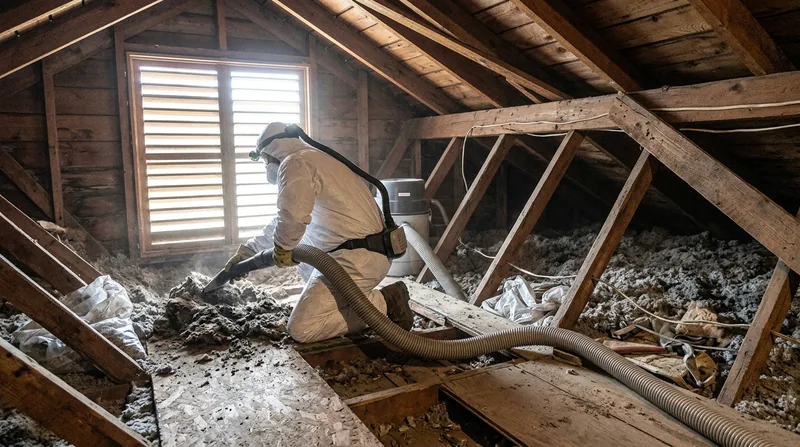




Old attic insulation in Grand Junction homes settles thin over decades and stops doing its job on cold winter nights. We remove old fiberglass or cellulose from attics and crawl spaces near downtown and North Avenue before new foam goes in. The high desert climate here creates a double load: scorching dry summers that push cooling demand hard, and clear winter nights with temperature swings of 40 degrees or more between day and night. Settled insulation fails fast under that stress. Before we spray new spray foam insulation or blown-in fiberglass, we clear out the dead material, haul it away, and leave a clean substrate. That step is the difference between a retrofit that works and one that fails in five years.
Why Insulation Removal Matters in Grand Junction's High Desert Climate
Grand Junction sits in IECC climate zone 5B, where old attics face a unique challenge. Homes built in the 1950s through 1980s along North Avenue and near downtown typically rest on crawl spaces or shallow basements with original fiberglass batts or blown cellulose that has compressed to half its R-value. The wide day-to-night temperature swings and low humidity mean the real enemy is air leakage and the stack effect, not moisture. Settled insulation cannot seal air leaks or maintain thermal resistance. Removing it and replacing it with spray foam or modern blown-in material is how homes here stay comfortable year-round without burning energy.
- Settled fiberglass and cellulose lose 40 to 60 percent of their R-value over 20 to 30 years in Grand Junction's dry climate.
- Air leakage through gaps between settled batts and rim joists drives heating and cooling loss in cold winter nights and hot summer days.
- Removal clears the path for a complete air seal with spray foam, closed cell or open cell, depending on your goal.
- Crawl space insulation that has sagged or fallen off band joists must be cleared before new foam can do its job.
- Attics with old cellulose or fiberglass mixed with dust and debris benefit from a complete tearout before re-insulation.
Removing failed insulation is not optional on a retrofit job; it is the foundation of any durable upgrade in the Grand Valley.
Key info: Older homes in Clifton and Orchard Mesa often sit on slabs or shallow crawls with vented attics that have lost their original insulation pack. Removal and replacement is the most cost-effective way to cut energy bills and stop the winter heat loss that dominates heating season in this climate zone.
For more detail on what comes next after removal, see our page on attic spray foam insulation in Grand Junction.
How We Remove Old Insulation in Grand Junction Homes
Removal is not just pulling out batts and leaving dust behind. We use commercial vacuum equipment to extract old fiberglass, cellulose, or damaged foam from attics and crawl spaces safely and completely. The process protects your home, controls dust, and leaves a clean surface ready for new material. We inspect the substrate for mold, water damage, or pest contamination before we start, because spray foam does not fix a wet or contaminated attic. If the roof leaks or the crawl space has standing water, we walk away and tell you to fix the moisture first. That is not a limitation; it is how you get a retrofit that lasts.
- We set up negative air pressure with HEPA filtration to contain dust and debris during removal.
- Old fiberglass, cellulose, and failed foam are loaded into sealed containers and hauled to a licensed disposal facility.
- We inspect rim joists, band joists, and structural wood for damage or pest activity before we leave.
- Substrate is vacuumed clean, and any small gaps or cracks are noted for sealing during the foam application.
- We verify local code requirements for attic ventilation, thermal barriers, and ignition barriers before the new install begins.
The result is a blank slate and a ready surface for whatever comes next, whether that is spray foam, blown-in fiberglass, or a hybrid approach.
Example: A 1970s ranch in Redlands with a trussed attic and settled cellulose throughout. We remove 8 inches of compressed material, vacuum the decking, inspect the rim joists for gaps, and prepare the space for closed cell spray foam. The job takes one day, and the homeowner is ready for the foam crew the next morning.
See our insulation replacement and re-insulation page for details on what happens after removal.
Removal Methods and Equipment
| Method | Material Handled | Best for |
|---|---|---|
| Commercial vacuum extraction with HEPA filtration | Fiberglass batts, blown cellulose, loose-fill fiberglass | Attics and crawl spaces where dust control and speed matter |
| Manual removal with containment | Damaged or wet insulation, failed spray foam | Tight crawls, small attics, or contaminated material |
| Selective foam scraping | Failed or over-sprayed closed cell foam | Attics where foam has cured poorly or blocked ventilation |
| Decking and substrate inspection | All types, with damage assessment | Every job, to catch leaks, rot, or pest activity before new foam |
Each method is chosen based on the material, the space, and what comes next. We never guess at the substrate condition; we inspect and report before we commit to a price.
Insulation Removal Cost in Grand Junction: What to Expect
Removal pricing in Grand Junction starts at $950 for a small attic or crawl space and scales with the volume of material, the complexity of access, and the condition of the substrate. A typical attic removal in a 1960s ranch in Clifton or Orchard Mesa runs 1,200 to 2,200 dollars depending on insulation depth and the need for containment or disposal upgrades. Crawl space removal costs more because of the tight access and the time required to work in those spaces safely. Getting 2 to 3 estimates from local contractors is smart; it anchors your budget and lets you compare how each crew assesses the job and what they include in their price.
- Volume of material is the primary cost driver: a 1,500 square foot attic with 6 inches of settled fiberglass costs less than the same space with 10 inches of blown cellulose.
- Access difficulty adds cost: attics with low headroom, tight rafter bays, or limited entry points take longer and may require specialized equipment.
- Substrate condition matters: if the decking is wet, moldy, or infested, inspection and reporting add time, though actual remediation is referred to a specialist.
- Disposal and hauling are included in our quote; we do not charge a separate fee for taking material to the landfill.
- Travel is included within Grand Junction and the surrounding areas; we do not charge mileage or a separate trip fee.
Removal is a precondition for any retrofit, so the cost is part of the total project budget. See our full pricing page for more detail on how removal ties into a complete insulation upgrade.
What to Look for When Hiring a Spray Foam Contractor Near Grand Junction
Not all insulation contractors are the same. The market includes rig-and-run crews from out of state who spray a job in an afternoon and disappear, national franchises with inconsistent quality, and local independents who stand behind their work. Choosing the right contractor is how you avoid problems weeks or months after the job is done. Ask the right questions, verify credentials, and get everything in writing. Your estimate should include R-value, thickness in inches, and a clear scope of work. If a contractor cannot or will not provide those details, move on.
- Verify that the contractor is fully insured and can provide a current certificate of insurance before work begins.
- Ask for references from recent jobs in Grand Junction, Clifton, Redlands, or nearby areas, and call at least two.
- Confirm that the contractor understands local code requirements for attic ventilation, thermal barriers, and ignition barriers at your specific address.
- Get a written estimate that states R-value per inch, total thickness, square footage covered, and the re-entry window after spray application.
- Ask whether the contractor will pull permits or help you navigate what the local building department requires for your project.
- Understand the workmanship warranty period; honest contractors offer one to three years, not a lifetime promise.
A local contractor with skin in the game will answer your questions directly and explain why they recommend a particular method or material. That transparency is the best indicator of quality. Ready to move forward? Contact us for a free estimate and we will walk you through the process with no pressure and no surprises.
Insulation Removal in Grand Junction: Pricing Guide
| Service | Price | Details |
|---|---|---|
| Small attic removal | Starting at $950 | Up to 1,000 sq ft with settled fiberglass or cellulose, includes vacuum extraction and disposal |
| Standard attic removal | Starting at $1,400 | 1,000 to 1,500 sq ft with 6 to 8 inches of material, includes inspection and substrate prep |
| Large attic or crawl space removal | Starting at $2,000 | 1,500+ sq ft or tight crawl access, multiple zones, or mixed material types requiring selective removal |
| Failed foam or complex substrate | On estimate | Wet material, mold-flagged areas, or previous poor-quality spray work require site inspection first |
| Travel and hauling | Included | No separate mileage or disposal fee within Grand Junction and surrounding service areas |
| Free written estimate | No obligation | Response within 24 hours at (970) 200-8449, includes scope, R-value specs, and timeline |
Indicative pricing, the exact cost depends on square footage, finish, and site access. Free personalized estimate within 24h at (970) 200-8449.


