Understanding Grand Valley's Extreme Climate Challenges
Living in Grand Junction means experiencing one of Colorado's most demanding climates. Summer temperatures regularly exceed 95 degrees Fahrenheit, while winter nights can plunge below freezing, sometimes reaching single digits. This dramatic temperature swing puts enormous stress on your home's envelope, forcing your HVAC system to work overtime throughout the year. Traditional fiberglass and cellulose insulation simply cannot keep up with these extremes, leaving homeowners with rising utility bills and inconsistent indoor comfort.
The Grand Valley's high elevation and arid climate create additional complications. Low humidity in summer can cause wood framing to shrink, creating gaps in conventional insulation. Winter moisture from heating systems can become trapped in porous insulation materials, reducing their effectiveness and creating potential mold issues. These challenges demand a more sophisticated insulation solution that adapts to local conditions and provides consistent performance regardless of season.
Why Spray Foam Outperforms Traditional Insulation in Extreme Temperatures
Closed Cell Spray Foam Insulation creates an air-tight seal that traditional batts and blown-in materials cannot match. When spray foam is applied, it expands to fill every cavity, crack, and gap in your attic or walls. This complete seal eliminates thermal bridging, the process where heat or cold travels through gaps in conventional insulation. In a Grand Valley home, this means your air conditioning stays inside during summer heat waves, and your heating remains trapped indoors during winter cold snaps.
The R-value per inch of spray foam is significantly higher than fiberglass or cellulose. While traditional attic insulation might offer R-3 to R-4 per inch, closed cell spray foam delivers R-6 to R-7 per inch. This superior performance means you need less material to achieve the same thermal resistance, and you achieve better results with less thickness. For homeowners in Grand Junction dealing with both extreme heat and cold, this efficiency translates directly into lower energy bills and better temperature stability throughout your home.
Open Cell Spray Foam Insulation offers another option for homeowners prioritizing cost-effectiveness while still gaining significant performance improvements over traditional methods. Open cell foam is slightly less dense and provides excellent sound dampening properties, making it ideal for homes near highways or in noisier neighborhoods. While it doesn't provide quite the same R-value per inch as closed cell, it still outperforms fiberglass significantly and costs less to install.
Metal Building Insulation: A Growing Need in Grand Valley
The Grand Valley has seen explosive growth in metal building construction over the past decade. Barndominiums, agricultural structures, and commercial metal buildings have become increasingly common as the region develops. However, metal conducts heat and cold with terrifying efficiency, making uninsulated or poorly insulated metal buildings nearly impossible to heat or cool effectively. This is where specialized metal building insulation becomes essential.
Best insulation for metal building applications is spray foam, hands down. Metal building insulation requires a product that adheres directly to the metal substrate, creating a continuous thermal barrier. Spray foam bonds permanently to metal surfaces, eliminating the air gaps that plague traditional batt insulation installed between metal framing. For a barndominium in the Grand Junction area, spray foam transforms an uncomfortable metal shell into a livable space with stable interior temperatures.
Pole barn insulation and steel building insulation present similar challenges and similar solutions. These structures typically lack the conventional framing that allows for standard insulation installation. Spray foam adapts to any building geometry, wrapping around posts, trusses, and metal panels seamlessly. Whether you're converting a pole barn into a workshop, storage facility, or living space, spray foam insulation provides the performance and adaptability that metal buildings demand.
Attic Spray Foam Insulation Near Me: When to Call a Professional
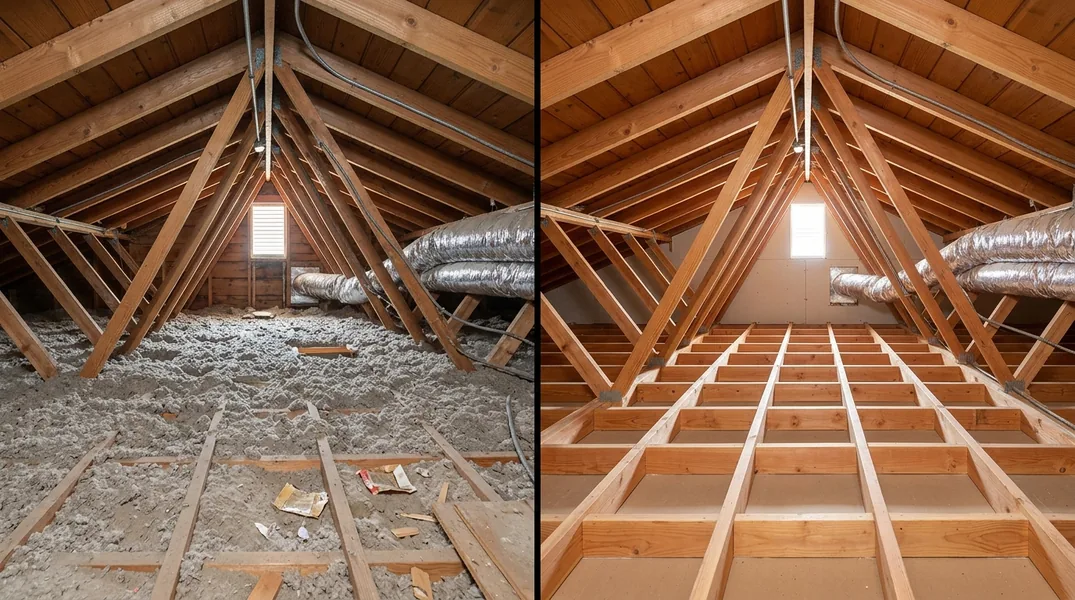
Attic Spray Foam Insulation is one of the most impactful home improvements you can make in a climate like ours. Your attic is where most home heat loss and gain occurs, making it the logical starting point for any energy efficiency project. If you're experiencing temperature swings in upper-floor bedrooms, noticing ice dams in winter, or seeing your cooling costs spike during summer, your attic insulation is likely failing.
Recognizing when to call a professional is important. While some homeowners attempt DIY spray foam projects, attic insulation requires proper equipment, safety training, and knowledge of local building codes. Professional spray foam contractors understand ventilation requirements, moisture management, and how to properly seal around electrical fixtures and other penetrations. Mistakes in attic insulation can lead to moisture problems, inadequate coverage, or safety hazards. Grand Junction Spray Foam Insulation has the expertise and equipment to deliver results that will serve your home for decades.
The best time to address attic insulation is before the season changes dramatically. Spring is ideal for preparation before summer heat arrives, and early fall allows you to upgrade before winter cold returns. If you're noticing comfort issues or energy bills rising, don't wait for the next extreme weather event. Contact Grand Junction Spray Foam Insulation at (970) 200-8449 to discuss your specific situation and get a free estimate for your project.
Wall and Injection Foam Insulation: Upgrading Existing Homes
Existing homes in Grand Junction often have hollow walls with minimal or degraded insulation. Replacing wall insulation typically requires tearing into walls, which is invasive and expensive. Wall & Injection Foam Insulation solves this problem by allowing contractors to inject foam directly into existing wall cavities without major demolition.
The process involves drilling small holes in the exterior or interior wall, then pumping expanding foam into the cavity. The foam fills every gap, around electrical wiring, around rim joists, and into corners where traditional insulation never reaches. Once cured, the holes are patched, and your walls have dramatically improved thermal performance. This approach is particularly valuable for older homes or homes with plaster walls that would be expensive to open up conventionally.
Injection foam also addresses rim joist insulation, one of the most common sources of air leakage in existing homes. Rim joists are the band of wood between the foundation and first-floor framing, and they're notoriously difficult to insulate with conventional methods. Spray foam injection seals this critical junction completely, eliminating drafts and improving basement comfort significantly.
Understanding Spray Foam Insulation Cost in Grand Junction: What to Budget
Homeowners often hesitate to pursue spray foam insulation because they assume the cost is prohibitive. While spray foam does cost more per square foot than fiberglass batts, the long-term value proposition is compelling. When you factor in energy savings, improved comfort, and the durability of spray foam over 20 to 30 years, the cost per year of benefit becomes very reasonable.
Several factors influence spray foam pricing for your specific project. The type of foam matters: closed cell costs more than open cell but delivers higher R-value and better moisture resistance. The size and complexity of the area being insulated affects labor time and material quantity. Accessibility also plays a role; an easily reached attic costs less to insulate than a complex metal building with difficult geometry. The best way to understand the investment for your situation is to get a customized quote from professionals who know your home and your needs.
Energy savings typically begin immediately after spray foam installation. Many homeowners report 15 to 30 percent reductions in heating and cooling costs, with higher savings in extreme climates like Grand Valley. These savings continue year after year, eventually offsetting the initial investment. Additionally, spray foam improves home resale value, as buyers recognize the benefits of superior insulation and lower utility costs. To explore specific pricing for your project and understand your potential return on investment, reach out to Grand Junction Spray Foam Insulation at (970) 200-8449 or request a free estimate today.
Looking for a professional spray foam insulation contractor in Grand Junction? Grand Junction Spray Foam Insulation responds fast for all your spray foam insulation needs.
Get a Free Quote