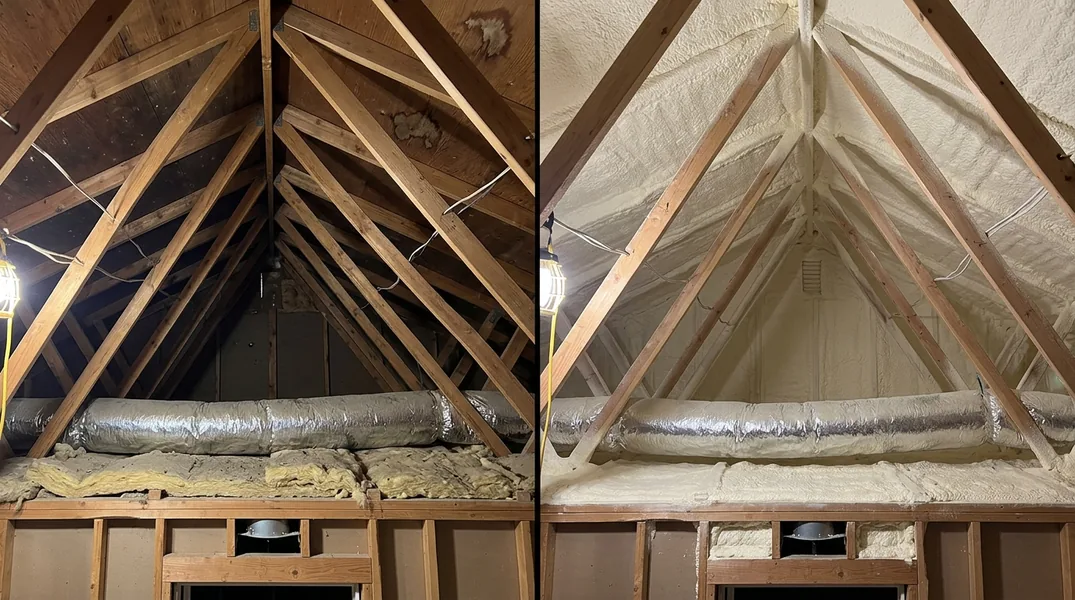
Understanding Attic Insulation: Air Sealing vs. Full Foam Coverage
Many homeowners in Grand Junction face a common dilemma when their energy bills climb or they notice drafts in their homes. The question isn't always whether to insulate, but rather how to insulate most effectively. Two popular approaches dominate the conversation: air sealing with traditional insulation and full Attic Spray Foam Insulation. Understanding the differences between these methods is crucial for making an informed decision that suits both your budget and your home's needs.
Air sealing involves identifying and closing gaps, cracks, and leaks in your attic using caulk, weatherstripping, and sometimes fiberglass batts or blown-in cellulose. This approach addresses the primary culprit behind energy loss: uncontrolled air movement. Full foam coverage, on the other hand, uses Closed Cell Spray Foam Insulation or Open Cell Spray Foam Insulation to create a continuous thermal and air barrier. Each method has merit, and the right choice depends on your attic's current condition, your climate zone, and your long-term energy goals.
Spray Foam Insulation R-Value Per Inch: What You Need to Know
When evaluating insulation options, R-value is a critical metric. R-value measures thermal resistance, and higher values mean better insulation performance. Closed Cell Spray Foam typically delivers 6 to 7 R-value per inch, making it one of the most efficient insulation materials available. Open Cell Spray Foam, by contrast, provides approximately 3.5 to 3.6 R-value per inch, which is closer to traditional fiberglass batts but with superior air sealing properties.
This difference matters significantly when determining how thick spray foam should be to meet your home's needs. If you choose closed cell foam, you'll need less thickness to achieve the same R-value as open cell foam. For example, achieving an R-38 attic insulation target requires roughly 5.5 to 6.5 inches of closed cell foam versus 10 to 11 inches of open cell foam. The thickness you ultimately need also depends on your state's R-value requirements and your specific climate zone. Understanding these relationships helps you make cost-effective decisions without sacrificing performance.
R-Value Requirements by State: Where Does Colorado Stand?
Colorado's building codes and energy standards set specific minimum R-value requirements for attic insulation. The state generally requires R-38 to R-49 for attics in most residential zones, depending on heating degree days and your specific location. Grand Junction falls into a moderate climate zone that typically calls for R-38 as a baseline, though many energy-conscious homeowners choose to exceed this standard for greater comfort and lower utility bills.
When you're deciding between topping up with air sealing and traditional insulation versus investing in full spray foam coverage, understanding these state requirements is essential. If your current attic insulation falls below the R-38 minimum, you have options. You could add fiberglass batts or blown-in cellulose on top of existing insulation, but this approach only works effectively if air leaks are already sealed. Alternatively, spray foam provides both the insulation and the air sealing in one application, ensuring you meet or exceed state standards while eliminating the risk of air gaps that compromise performance.
When Air Sealing Alone Is Enough: Assessing Your Attic
Not every attic requires a complete spray foam renovation. If your home already has adequate insulation depth (R-38 or higher) but you're experiencing energy loss, air sealing may be your most cost-effective solution. Common culprits in older homes include gaps around plumbing penetrations, electrical conduit, HVAC ducts, and where the attic meets exterior walls. Sealing these leaks can improve energy efficiency by 10 to 15 percent without the investment of full foam coverage.
Air sealing works best when combined with a professional energy audit. A trained technician can identify exactly where your attic is losing conditioned air and recommend targeted fixes. If your insulation is already at or near code requirements and air leaks are minimal or easily sealed, topping up with blown-in insulation and strategic caulking may deliver the performance gains you need at a fraction of the cost of full foam application. However, if your attic has significant air leaks, inconsistent insulation coverage, or if you want maximum long-term performance and durability, full foam becomes the more logical investment.
How Thick Should Spray Foam Be: Balancing Cost and Performance
Determining the right thickness for spray foam insulation requires balancing your R-value target, your budget, and your performance expectations. As mentioned earlier, closed cell foam at 6 to 7 R-value per inch means you'll need roughly 5.5 to 6.5 inches to hit R-38 in Grand Junction. Some homeowners choose to go thicker, aiming for R-49 or even R-60, which requires 7 to 9 inches of closed cell foam. This extra thickness increases upfront pricing but delivers superior thermal performance, reduced noise transmission, and better moisture control.
The thickness decision also affects installation complexity and timeline. Thicker applications require more material and longer curing periods, which can influence labor costs. Open cell foam, being less dense, requires greater thickness to achieve the same R-value, which can make it less practical for attics with limited height clearance. When you're ready to explore spray foam options and understand how thick your specific application should be, reaching out for a free estimate is the best first step. A professional assessment of your attic will account for existing insulation, air leaks, roof structure, and your energy goals.
Insulation Tax Credits and Rebates: Reducing Your Out-of-Pocket Cost
One of the most attractive aspects of upgrading your attic insulation is the potential for financial incentives. Federal insulation tax credits have been available to homeowners who invest in energy-efficient home improvements, including spray foam insulation. These credits can reduce your federal tax liability dollar-for-dollar, making your investment significantly more affordable. Additionally, many local utilities and state energy programs offer insulation rebates to encourage homeowners to improve their home's energy efficiency.
Before committing to any insulation project, research what incentives you may qualify for in your area. Some programs require pre-approval before installation begins, while others reimburse you after you've completed the work and submitted documentation. The combination of a federal tax credit and a local utility rebate can offset a substantial portion of your spray foam insulation cost, sometimes covering 20 to 30 percent of the total project expense. When you contact Grand Junction Spray Foam Insulation at (970) 200-8449 for your consultation, ask about current incentive programs. Our team stays updated on available credits and rebates and can help you understand which programs apply to your project, maximizing your savings while improving your home's comfort and efficiency.
Looking for a professional spray foam insulation contractor in Grand Junction? Grand Junction Spray Foam Insulation responds fast for all your spray foam insulation needs.
Get a Free Quote